
Network-Centric Warfare and Its Impact on Naval Engineering
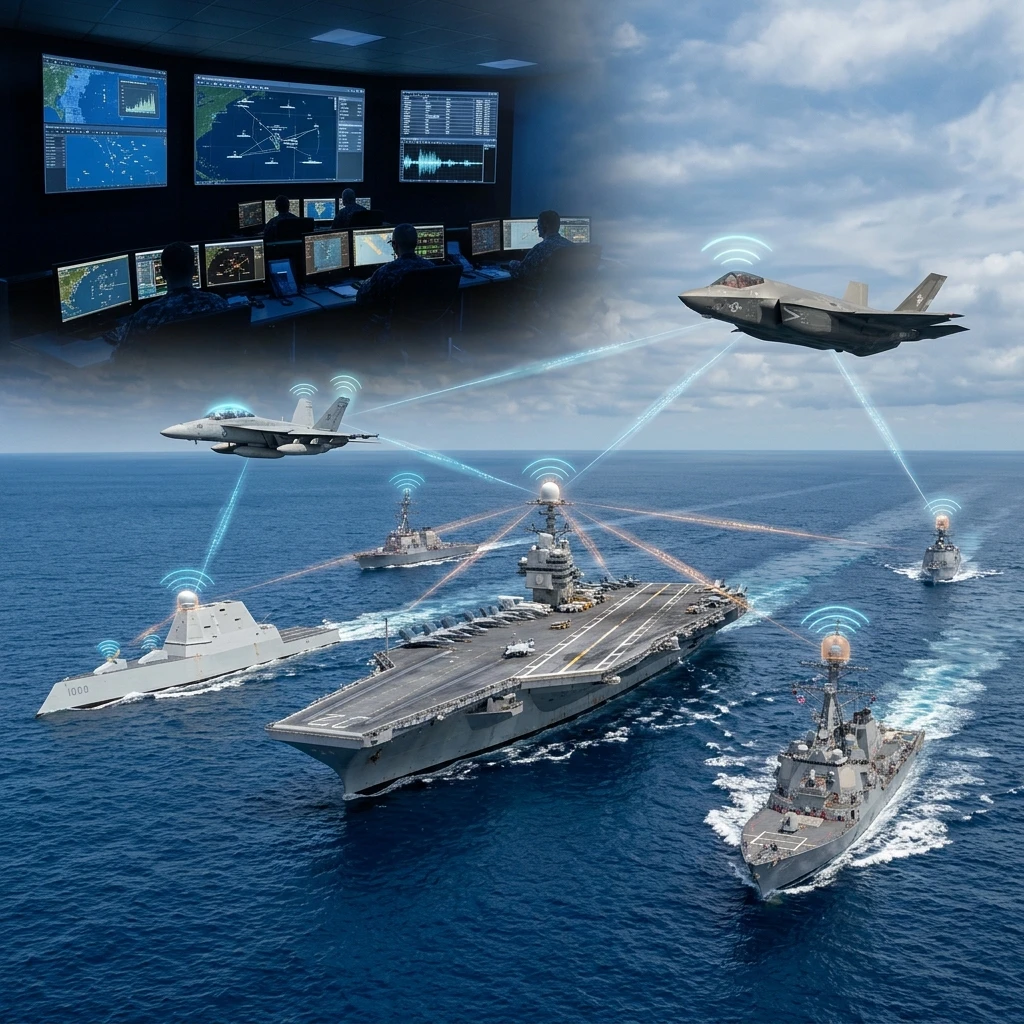
Network-centric warfare connects ships, sensors, command teams, and supporting platforms so they can share information and coordinate decisions. For naval engineering, that changes the design problem: a vessel must operate as a capable platform and as a secure, resilient participant in a wider information network.
The shift reaches into communications, power, software, cybersecurity, and maintenance. At a naval engineering conference, the practical question is how to make those systems work together under real operating constraints, including limited bandwidth, equipment failures, and disrupted communications.
What Network-Centric Warfare Means at Sea
Network-centric warfare uses connected sensors, platforms, and command and control (C2) systems to share operational information and support coordinated decisions. At sea, this can improve maritime domain awareness by helping operators build a more timely, shared picture from multiple sources.
A radar contact, an identification report, and information from a remote sensor may each provide only part of the picture. Sensor fusion combines relevant data, while C2 processes help personnel assess it, communicate intent, and coordinate action. The network supports decisions; it does not make judgment or sound operational procedures unnecessary.
Connectivity also has limits. Data may arrive late, lack context, or conflict with another report. A shared display can create confidence without certainty if its sources, age, or reliability are unclear. Engineering and operational design must therefore address the quality and provenance of information, not simply its availability.
The Naval Information Network
A naval information network links sensors, platforms, communications, and command systems so that operational data can reach the people and systems that need it. Its usefulness depends on reliable connections and clear rules for what information is shared, when, and in what form.
The network can include shipboard radar and navigation equipment, communications terminals, aircraft or other platforms, shore-based command centers, and data-processing systems. Secure communications carry information between these nodes, while onboard networks connect equipment within a vessel. Each link brings engineering requirements for interfaces, timing, access control, and fault monitoring.
Bandwidth is a resource, not an unlimited utility. A design may need to prioritize critical messages, compress or summarize data, and preserve local processing when a link is unavailable. Engineers should consider where data originates, how it is labeled, how long it remains useful, and how operators can recognize stale or incomplete information.
Useful network design is therefore more than connecting every available sensor. It places information in a form that supports the task without overwhelming operators or consuming capacity needed for essential communications.
Implications for Ship Design and Engineering
Network-centric warfare affects ship design by increasing the importance of communications infrastructure, computing, cybersecurity, and upgradeable systems alongside traditional platform requirements. Those additions compete for space, power, cooling, weight, and maintenance access.
Antennas and communications equipment need suitable locations and electromagnetic compatibility with other ship systems. Computing and network equipment require power, cooling, physical protection, and a plan for replacement. Cable routes, equipment rooms, and access for technicians can be difficult to change once a vessel is built, so early coordination across naval architecture and systems engineering matters.
Modularity can make modernization easier, but it is not free. Standardized interfaces and reserved capacity may increase initial design effort or occupy space that a tightly optimized ship would otherwise use. The trade-off is the ability to add or replace equipment without extensive redesign. Engineers should evaluate lifecycle cost and upgrade pathways, not only delivery-day performance.
Design reviews can make these constraints tangible by asking:
- Is there reserved space, power, cooling, and cable capacity for planned upgrades?
- Can maintainers replace network equipment without disrupting unrelated systems?
- Are network failures visible to operators, with workable local alternatives?
- Have software support, configuration control, and obsolescence been considered over the vessel’s service life?
Integration, Interoperability, and Data Quality
Systems integration connects equipment and software into a functioning whole; interoperability lets different systems exchange and interpret information correctly. Both are essential to a useful naval network, and neither is guaranteed by installing compatible-looking hardware.
Platforms may use different data formats, interface standards, security rules, and update schedules. Integration teams must map data fields, define message behavior, test timing, and establish how systems handle missing or conflicting inputs. A message that transfers successfully can still be misinterpreted if its units, coordinate reference, timestamp, or confidence level are unclear.
Data quality deserves its own engineering attention. Operators need to know where information came from, when it was produced, and whether it has been processed or verified. Poorly labeled data can spread quickly through a network, making a common operating picture less dependable rather than more useful.
Testing should cover more than ideal conditions. Engineers can assess performance during high traffic, partial equipment failure, software changes, and connection loss. Common mistakes include treating interface compliance as proof of interoperability, postponing integration tests until late in development, and assuming that more data automatically improves decisions. Early end-to-end testing helps expose these problems while designs can still change.
Cybersecurity and Resilience at Sea
Connected naval platforms face cybersecurity risks from unauthorized access, compromised equipment, software weaknesses, and disruption to communications. Resilient engineering combines protective controls with the ability to continue essential operations when networks are degraded or unavailable.
Cybersecurity begins with a clear view of the system: equipment, software dependencies, connections, access privileges, and update processes. Segmentation can limit how far a problem spreads, while controlled access, secure configuration, monitoring, and disciplined maintenance reduce exposure. Security measures also need to work at sea, where patching and specialist support may not be immediately available.
Protection can create operational costs. Strict access controls may slow maintenance, and added security equipment consumes resources and requires testing. Those costs should be weighed against the consequences of compromised systems, then addressed through procedures that preserve both security and maintainability.
Resilience also requires graceful degradation. A ship should retain essential local functions if a remote connection fails, and operators should have procedures for verifying information through alternate means. Redundant paths can help, but redundancy only improves resilience when the paths do not share the same vulnerable equipment, power source, or dependency.
Exercises and engineering tests should include communications loss, corrupted or delayed data, and recovery after an outage. The goal is to understand what capabilities remain, who has authority to act, and how the network can be restored safely.
Priorities for Naval Engineering and Conference Discussion
Naval engineering teams should treat network capability as a lifecycle design concern, integrating it with platform architecture, operations, maintenance, and security from the outset. Conference discussions are most useful when they connect technical choices to how crews will operate and sustain systems at sea.
Several priorities can guide that work:
- Design for the mission and the outage. Identify which information and services are essential, then define how the ship operates when links fail.
- Test interoperability early. Bring representative systems together before late-stage integration, and verify that shared data retains its meaning.
- Plan for change. Reserve practical capacity for equipment and software updates, with configuration control and support needs included in lifecycle planning.
- Make cybersecurity part of systems engineering. Coordinate protective controls with maintainability, access, and operational requirements.
- Measure information quality. Check timeliness, source visibility, and operator workload as well as network availability.
Useful conference questions include: Which interface standards have proven workable across platform generations? How should testing account for degraded bandwidth and contested communications? What data should remain available locally, and how can operators distinguish trustworthy information from stale or uncertain reports?
Network-centric warfare makes naval engineering more interdependent. A successful design connects systems while preserving security, usability, and the ability to keep operating when connections fail. The most valuable technical exchange focuses on those trade-offs across the full service life of the ship.