

How to Spot Safe and Responsible Online Gambling Platforms in the UK: A 2026 Guide
Why Choosing a Safe Online Casino Matters More Than Ever in 2026
The UK online gambling market has exploded — and I mean actually exploded, not marketing-speak — at a pace that still catches me off guard, and I follow this stuff for a living. New platforms pop up almost every week now, each one promising bigger bonuses, smoother apps, faster payouts than whatever launched seven days earlier. I've picked a lot of these sites apart, line by line. And the thing that actually stands out isn't the glossy marketing. It's how wide the gap has grown between operators who genuinely care about protecting players and the ones just chasing deposits, full stop.
That gap matters. A lot. Gambling, when nobody's keeping an eye on it, can cause real damage — financially, emotionally, to relationships that have nothing to do with the casino itself. I'm not saying this to scare anyone off; regulators say it, charities say it, even parts of the industry quietly admit it. What I'm aiming for here is simple: help you spot what a genuinely safe platform looks like, make sense of the newer payment trends reshaping the landscape (crypto sites included), and point you toward real support if gambling stops feeling like fun and starts feeling like a problem.
What Makes an Online Gambling Platform 'Safe and Responsible'?
A safe platform isn't just one with a polished interface and a flashy welcome offer — plenty of dodgy sites have both, and that's exactly the trap. What it actually comes down to is accountability. Proper licensing. Terms that don't hide behind legal jargon. Solid data protection, independently tested games, and tools that let you control your own play. Miss even one of those pieces, and I'd call it a dealbreaker — not a shrug-and-move-on detail you overlook because the sign-up bonus looked good.
Checking for UK Gambling Commission Licensing
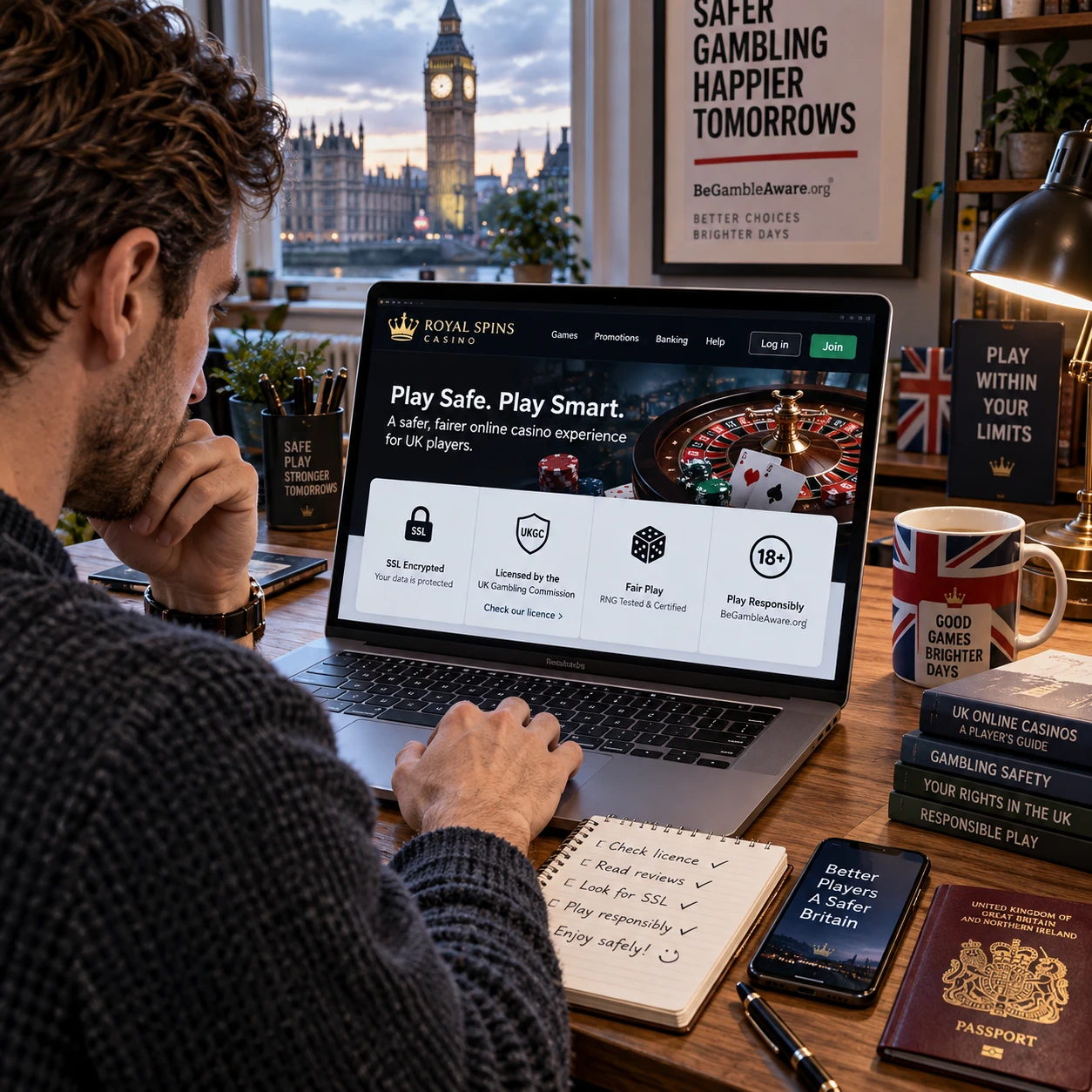
This is the one check that matters most, and it takes about thirty seconds — I'm not exaggerating. Every legitimate operator serving UK players has to hold a licence from the UK Gambling Commission (UKGC). No way around it, no grey area. Search the operator's name or licence number on the UKGC's public register and see what comes up. If a site won't show its licence number clearly in the footer, or that number doesn't match anything official on the register, walk away. No exceptions. Really — none.
Red Flags That Signal an Unsafe Platform
Beyond licensing, there's a handful of other warning signs worth training your eye on — patterns I've learned to spot after staring at way too many of these sites:
- No visible licence information, or vague references to 'international gaming authorities'
- Bonuses that sound almost too generous, with wagering requirements buried deep in the fine print
- Customer support that's slow, unresponsive, or only reachable through some generic email address
- No self-exclusion or deposit limit tools anywhere in the account settings
- A pattern of unresolved complaints piling up on independent forums or review sites
Emerging Payment Trends: A Look at Tether Casinos
One shift I've watched pick up real speed through 2026 is the rise of crypto-friendly gambling sites — specifically the ones built around USDT, better known as Tether. These platforms let players deposit and withdraw using stablecoin instead of regular fiat currency. And the appeal isn't hard to understand: transactions clear almost instantly, fees are often next to nothing, and there's a layer of privacy that traditional banking just doesn't offer. Fast. Genuinely fast.
Still, I'd push for a healthy dose of caution here. Many tether casinos operate out of jurisdictions with lighter regulatory oversight than what the UKGC enforces, which means the usual safety nets — mandatory responsible gambling tools, dispute resolution, strict advertising rules — aren't guaranteed. Some operators in this space are entirely legitimate, even go beyond what's required to protect players. Others exist specifically to dodge the regulations that keep UK gamblers safer. Doing your homework before you deposit crypto isn't optional. It's basic self-protection — same as checking a lock before you leave the house.
Pros and Cons of Using Crypto Payments for Gambling
On the upside: crypto transactions are fast — often fee-free — and give players more control over their financial privacy. For anyone who values discretion, or who's tired of waiting three or four days for a bank transfer to clear, that's a genuine draw, not a gimmick.
On the downside, the regulatory gaps aren't theoretical. Without a UK licence backing the platform, there's a lot less recourse if something goes sideways: disputed withdrawals, frozen accounts, terms that quietly shift underneath you. Add in the broader volatility of crypto markets (Tether itself is pegged to the dollar, but exchange and wallet risks don't vanish just because of that peg) and you end up with a payment method that rewards careful, informed players far more than impulsive ones.

Practical Steps to Vet an Online Casino Before You Play
Before you deposit a single pound — or a single USDT token — run through this checklist. It's not glamorous, but it works:
- Read the terms and conditions in full, especially around bonuses and withdrawal limits
- Test customer service with a genuine question before signing up — see how fast, and how helpfully, they actually respond
- Check stated withdrawal times and compare them against real player reviews on independent sites
- Search the operator name alongside words like 'complaint' or 'review' and see what surfaces
- Confirm that deposit limits, time-out options, and self-exclusion are easy to find in account settings
Maybe fifteen minutes of research, total. That's it. And it can save you a lot of frustration — or worse — further down the line.
Recognising the Signs of Problem Gambling
Even on the safest platform, gambling can turn harmful if nobody's paying attention — including you. The signs don't always announce themselves with a flashing warning light. Chasing losses by betting bigger to 'win it back,' hiding spending from family or partners, borrowing money specifically to gamble, letting work or relationships slide because of time spent playing — these are worth taking seriously, whether you're spotting them in yourself or in someone close to you.
Self-Assessment Tools and Early Intervention
Several free, confidential self-assessment quizzes exist through UK-based charities, and they're genuinely useful for taking an honest look at your own habits. Apps that track time and money spent gambling can flag patterns before things escalate too. I'd actually recommend using one periodically even if you don't think there's a problem. Early awareness makes early intervention a whole lot easier — that part, I'm fairly confident about.
Where to Find Help and Support in the UK
If gambling has started feeling unmanageable, you're not alone — and help is there, properly there, not just a phone number nobody answers. Organisations like GamCare, BeGambleAware, and the National Gambling Helpline offer free, confidential support, counselling, and practical advice. Beyond the big national charities, there are local community support services too — ones that understand the specific pressures of their area, whether that's Redcar or anywhere else in the UK — offering guidance, peer support, and recovery resources built around individual circumstances rather than some one-size-fits-all script.
Self-Exclusion Schemes (GAMSTOP)
GAMSTOP is a free self-exclusion scheme covering all UK-licensed online gambling operators. Register, and you're blocked from licensed sites and apps for a period you pick — six months, a year, five years, whatever fits. It's a genuinely useful tool, and signing up takes maybe five minutes. Worth flagging: GAMSTOP only applies to UKGC-licensed sites, which is yet another reason to tread carefully around unlicensed crypto platforms sitting outside that protection.
Conclusion — Playing Smart in the Age of Digital Gambling Innovation
The online gambling landscape in 2026 is more inventive than it's ever been — but that innovation comes bundled with new responsibilities for players, whether they realise it or not. Checking licensing, watching for red flags, understanding the trade-offs of emerging options like tether casinos, knowing the support services available if things go wrong — none of this is complicated. But it matters a great deal. Play smart, do the research, and don't hesitate to reach out for support early. It's always better to ask the question before it turns into a crisis.