
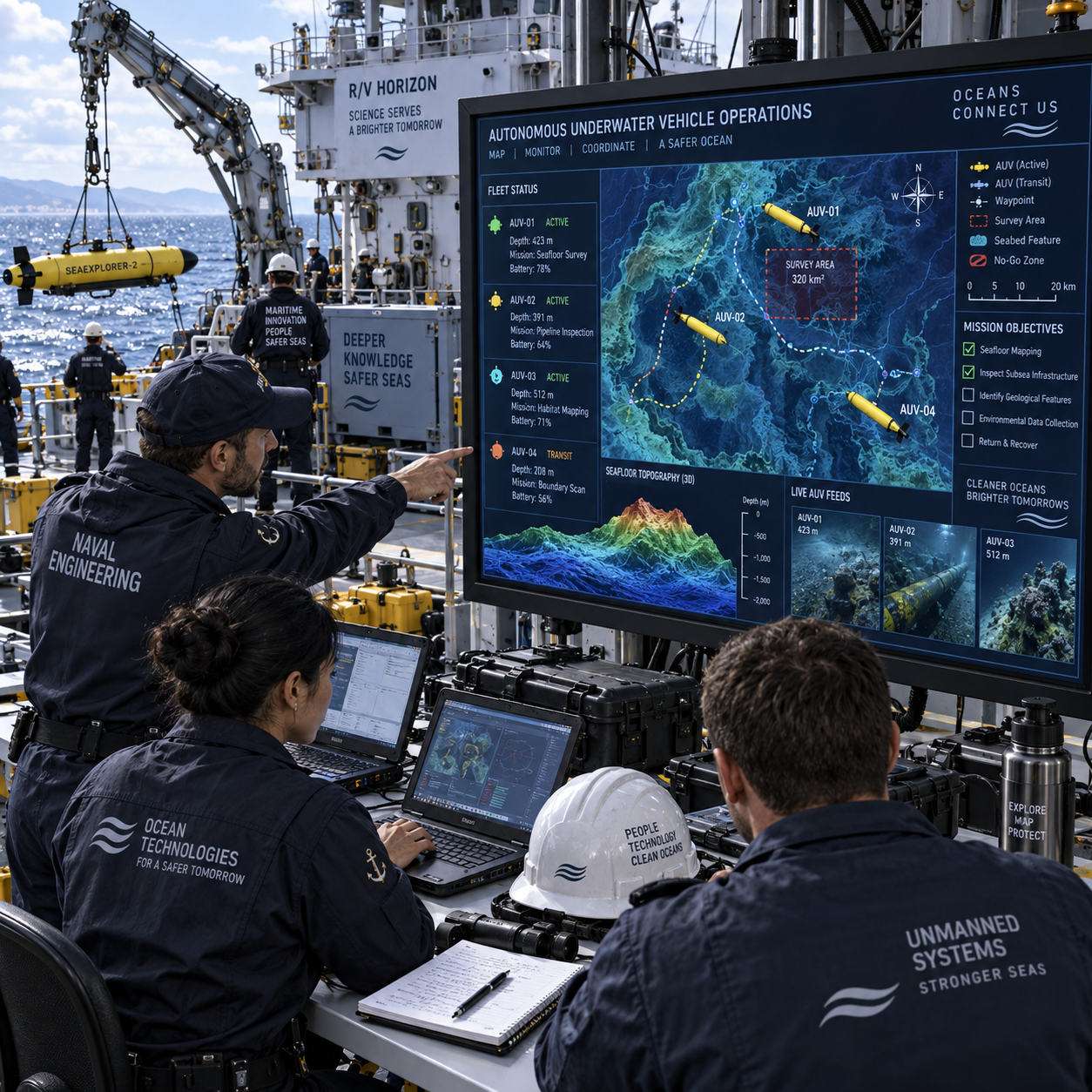

Human Factors in Modern Ship Control Interfaces: Engineering People-Centered Maritime Systems
Why Human Factors Matter in Ship Control Today
Human error contributes to an estimated 75–96% of maritime accidents, according to data consistently cited in IMO safety reviews and naval engineering literature. That figure alone explains why Human Factors Engineering (HFE) has moved from a peripheral concern to a central design discipline in ship control system development.
Modern vessels operate in environments of compounding complexity — high traffic density, adverse weather, multi-system monitoring, and reduced crew sizes. The bridge officer managing a large container ship through a congested strait is simultaneously tracking radar returns, responding to AIS alerts, coordinating with engine control, and communicating with port authorities. The interface design either supports that cognitive load or amplifies it.
For practitioners at naval engineering conferences and ship control systems symposia, the practical question is not whether human factors matter — it is how systematically they are being addressed during the design, integration, and certification phases of maritime systems development.
Key Principles of Human Factors Engineering Applied to Bridge Design
Cognitive ergonomics forms the foundation of effective bridge design: interfaces must match how human operators actually perceive, process, and respond to information — not how engineers assume they do.
Several HFE principles translate directly into design decisions for ship control environments:
- Cognitive load management: Operators have finite working memory. Interface layouts that require excessive mental calculation — converting units, cross-referencing displays, interpreting ambiguous symbols — degrade performance precisely when workload is already high.
- Error tolerance and recoverability: Systems should be designed so that operator errors are detectable, reversible, and contained. A confirmation step before executing an irreversible autopilot override costs two seconds; recovering from an unintended course change in restricted waters may cost considerably more.
- Feedback loop integrity: Operators need timely, unambiguous confirmation that control inputs have been received and executed. Delayed or absent feedback is a documented contributor to mode confusion — a condition where the operator's mental model of system state diverges from actual system state.
- Consistency and spatial memory: Control functions that migrate between interface screens, or that behave differently across operating modes, force operators to re-learn workflows under stress. Stable spatial layouts allow procedural memory to reduce conscious effort.
These principles are not abstract. They translate into concrete decisions: where to place the ECDIS relative to the radar display, how to structure alarm priority hierarchies, whether automation status is communicated through color, text, or both.
The Evolution of Integrated Bridge Systems and HMI
Integrated Bridge Systems (IBS) represent the consolidation of navigation, propulsion monitoring, communication, and safety functions into a unified operator environment — and the human-machine interface design challenge has grown proportionally with that integration.
Earlier bridge layouts were physically distributed: the radar was here, the chart table there, engine telegraphs to the side. Each system had its own dedicated controls and displays. Operators developed spatial routines around fixed hardware. The cognitive model was simple, even if the physical workload was high.
Digital IBS platforms replaced that distributed architecture with software-rendered displays, touchscreens, and configurable workstation layouts. The theoretical benefit is significant: information can be fused, filtered, and presented contextually. The practical risk is equally significant: poorly designed digital interfaces can present operators with more information than they can process, in formats that obscure rather than clarify system state.
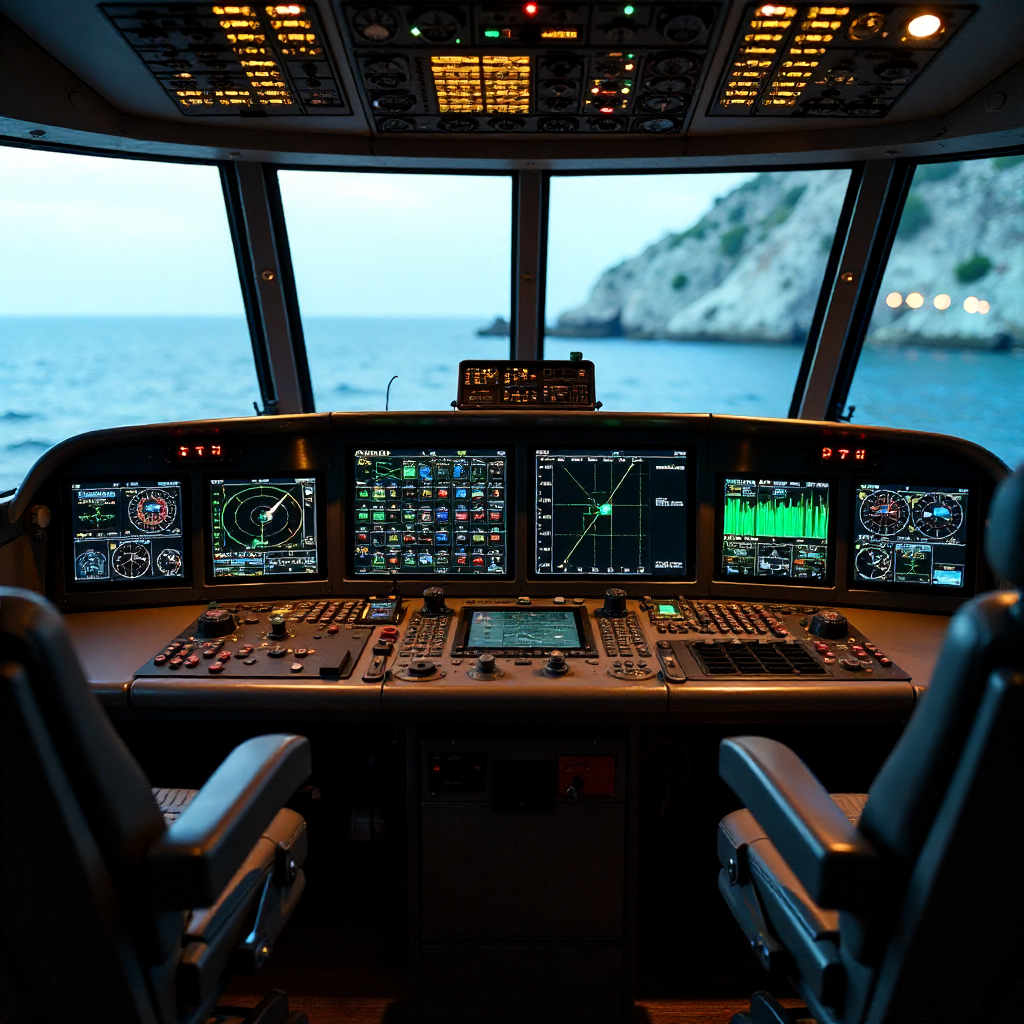
Mode proliferation is a specific HMI challenge that emerged with digital integration. When a single display surface can represent dozens of system states — and when the transition between modes is managed through software rather than physical switches — operators lose the tactile and spatial cues that previously anchored their situational model. Naval engineering conferences have devoted increasing attention to mode awareness as a discrete design problem, not simply a training issue.
Situational Awareness and Operator Workload Challenges
Situational awareness — the accurate perception, comprehension, and projection of relevant environmental and system states — is the cognitive foundation of safe ship operation. Its degradation is a precursor to most serious maritime incidents.
Mica Endsley's three-level model of situational awareness (perception, comprehension, projection) is widely applied in maritime HFE research, and it maps cleanly onto bridge design requirements. An operator who perceives that vessel speed is decreasing (level 1), understands that this is because the autopilot has shifted to waypoint approach mode (level 2), and anticipates that a course alteration will be required in four minutes (level 3) is operating with full situational awareness. Remove any one of those levels and the risk profile changes substantially.
Automation complacency is the most discussed threat to situational awareness in contemporary maritime systems. As autopilot systems, collision avoidance aids, and dynamic positioning become more capable, operators naturally reduce active monitoring. This is rational behavior — until the automated system encounters a condition outside its design envelope and requires rapid human intervention. The handover problem, where automation disengages and returns control to an operator who has been passively monitoring for hours, is an active research focus in both naval engineering and aviation human factors.
Operator workload follows a non-linear pattern in ship control environments. Long periods of low demand — open-ocean transits — are punctuated by high-demand episodes: port approaches, traffic separation scheme transits, emergency responses. Interface designs optimized for routine operations often perform poorly during exactly the scenarios where performance matters most.
Alarm Management and Decision Support in Modern Vessels
Alarm flooding — the condition where a single system fault triggers cascading secondary alarms that overwhelm operator processing capacity — is one of the most well-documented human factors failures in maritime operations. It is also preventable through systematic alarm rationalization.
Effective alarm management in ship control systems requires distinguishing between alarms (conditions requiring immediate operator action), alerts (conditions requiring awareness and monitoring), and status indications (informational). When these categories collapse — when everything is presented at the same priority level — operators learn to ignore or acknowledge alarms without processing them. The IMO's guidelines on bridge alert management, codified in MSC-MEPC.2/Circ.12 and subsequent SOLAS amendments, establish rationalization requirements, but compliance does not guarantee usability.
Decision support systems represent the next layer of human factors design: tools that not only alert operators to conditions but provide structured guidance on response options. Well-designed decision support reduces the cognitive burden of diagnosis under stress. Poorly designed decision support adds another information stream to an already saturated display environment. The design question is not whether to include decision support, but how to integrate it without increasing the operator's net cognitive load.
Standards, Testing, and Human-Centered Design Processes
Compliant and effective ship control interfaces require both regulatory alignment and empirical validation — and these are not the same thing. Meeting an IMO standard does not guarantee that an interface will support operator performance under realistic conditions.
The primary standards framework relevant to maritime HMI includes IMO Resolution MSC.252(83) on Integrated Bridge Systems, IEC 62923 on bridge alert management, and ISO 9241 on ergonomics of human-system interaction. These documents establish minimum requirements for display legibility, alarm categorization, control accessibility, and system feedback. Naval architects and systems engineers working on bridge design need familiarity with all three layers.
Beyond compliance, human-centered design processes require iterative empirical testing. Specific methods applied in maritime HFE include:
- Task analysis: Systematic decomposition of operator workflows to identify cognitive demands, decision points, and error-prone transitions — conducted before interface design begins, not after.
- Usability testing with representative operators: Structured observation of licensed mariners interacting with prototype interfaces under simulated operational scenarios. Metrics include task completion time, error frequency, and subjective workload ratings (typically using the NASA-TLX scale).
- High-fidelity simulation: Full-mission bridge simulators allow evaluation of interface designs under realistic traffic, weather, and fault conditions without operational risk. Several naval engineering research institutions operate simulation facilities specifically for this purpose.
- Heuristic evaluation: Expert review against established usability principles, useful for early-stage design assessment before simulation resources are engaged.
Choosing simulation for validation means accepting the time and cost of high-fidelity scenario development; skipping it means accepting the risk of discovering interface failures during actual operations.
Human Factors as a Conference Theme: What Naval Engineers Are Discussing
Human factors engineering has become a consistent and growing theme at international naval engineering conferences and ship control systems symposia — reflecting both the maturation of the discipline and the urgency of unresolved design challenges.
Current discussion threads at events like the International Naval Engineering Conference (INEC) and the Ship Control Systems Symposium (SCSS) tend to cluster around several intersecting topics: the human-automation boundary in increasingly autonomous vessels, the adequacy of current IMO standards for next-generation bridge environments, and the methodological gap between HFE research and engineering practice.
A recurring tension in these discussions is the pace mismatch between technology development and human factors validation. Sensor fusion systems, AI-assisted collision avoidance, and remote monitoring capabilities are being integrated into vessel designs faster than the human performance implications are being studied. Conference presentations increasingly call for HFE to be embedded earlier in the system development lifecycle — not as a compliance checkpoint at the end, but as a design input from the concept phase.
For engineers preparing presentations or research contributions for naval symposia, the most productive framing positions human factors not as a constraint on system capability, but as a design variable that determines whether system capability is actually realized in operational conditions. An automated decision support system that operators distrust, misunderstand, or override habitually delivers no operational benefit regardless of its technical sophistication.
Frequently Asked Questions
What is the role of human factors engineering in ship bridge design?
Human Factors Engineering in bridge design ensures that control interfaces, alarm systems, and information displays match operator cognitive capabilities and limitations. HFE methods — including task analysis, usability testing, and simulation — are applied to reduce error risk, support situational awareness, and optimize operator workload across the full range of operational scenarios.
How does automation affect operator situational awareness on modern vessels?
Automation can degrade situational awareness through complacency: operators who passively monitor automated systems for extended periods develop reduced engagement with system state, making rapid intervention difficult when automation disengages or encounters edge-case conditions. Effective HMI design maintains operator engagement through active monitoring requirements and transparent automation status communication.
What standards govern human-machine interface design in maritime systems?
Key standards include IMO Resolution MSC.252(83) on Integrated Bridge Systems, IEC 62923 on bridge alert management, and the ISO 9241 series on human-system interaction ergonomics. SOLAS Chapter V contains relevant navigational equipment requirements. These standards establish minimum design requirements but should be supplemented with empirical usability validation.
How is operator workload measured and managed in ship control environments?
Operator workload is typically assessed using the NASA Task Load Index (NASA-TLX), a multi-dimensional subjective rating scale covering mental demand, physical demand, time pressure, effort, frustration, and perceived performance. Workload management strategies include task allocation design, interface simplification during high-demand phases, and automation that handles routine monitoring while preserving operator engagement with critical decisions.
Why is alarm management a critical human factors issue in naval engineering?
Alarm flooding — where a single fault generates cascading secondary alarms — can saturate operator attention at precisely the moment when focused response is required. Poor alarm rationalization leads to habituated acknowledgment without action, masking genuine emergencies. Systematic alarm management, guided by standards like IEC 62923, reduces nuisance alarms, establishes clear priority hierarchies, and ensures that alarms represent conditions genuinely requiring operator response.